
We are all Saints in Spitalfields, Even the Worst of us
We are all Saints in Spitalfields,
Even the Worst of us

26 November 2026
26 November 2026
Iain Sinclair is a writer who lives in Hackney. For decades he has walked London’s streets, documenting his observations and chronicling the strange histories and outsiders that make up the city’s fringes.
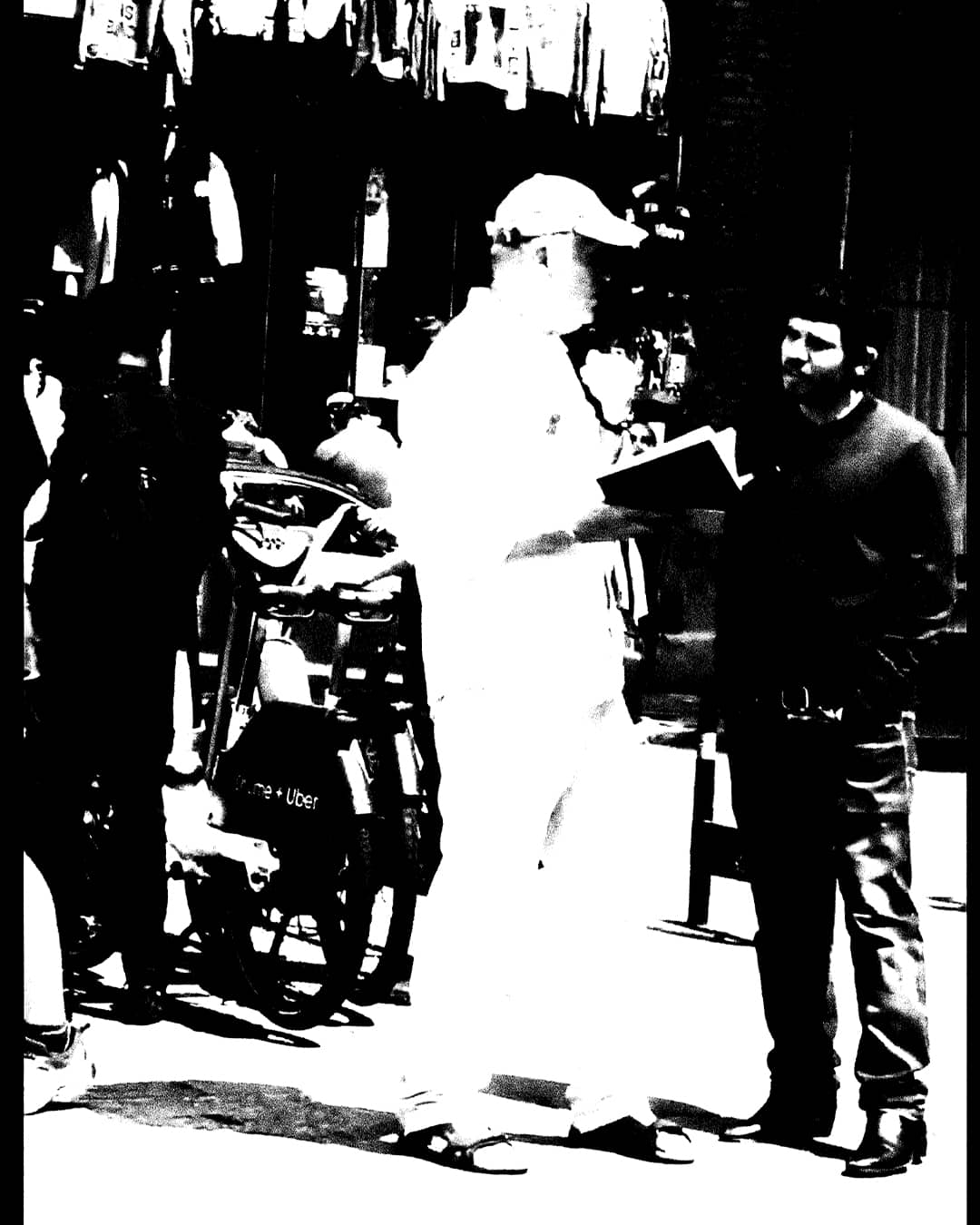
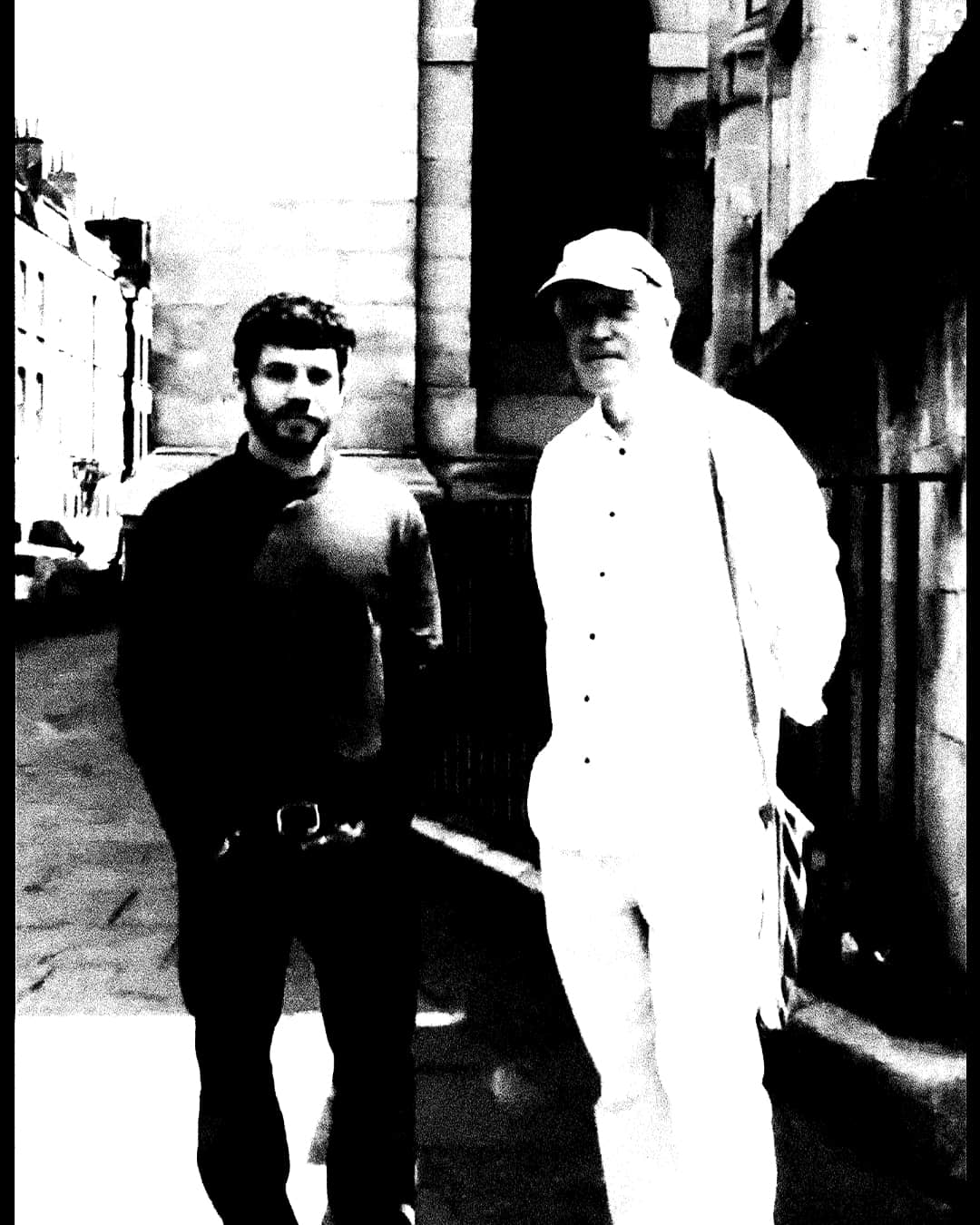
This summer, we invited him to meet Aaron Esh, AllSaints’ then newly appointed Chief Creative Officer, to walk around Spitalfields – AllSaints’ home, and an area of ongoing inspiration for the pair.
Together, they discovered a shared language in their work, underpinned by a fascination with this small patch of London: a fascination Aaron has translated into clothes and Iain into books. We followed Aaron and Iain down the cobbled streets of east London for a conversation spanning fashion and psychogeography, as featured in The Ram.

First the Romans built a cemetery. Then a hospital, ‘St Mary Spital’, stood on its ruins. The fields beyond the Spital became rural. Development started eastward. Londoners settled, then the Huguenots came, too. They came from France, bringing little with them apart from their silk. They started weaving. They started an industry. Spitalfields grew. Hawksmoor built Christ Church. Charles I gave licence for flesh, fowl and roots to be sold at a market called Spittle Fields. Mary Jane Kelly was killed by Jack the Ripper as the new Spitalfields became a byword for urban deprivation, the worst crookery in London. New trades appeared - a paper bag shop opened, a beigel shop opened, Truman's Brewery was expanded. A wave of Jewish refugees came; they worked in textiles. A wave of Bangladeshi immigrants came; they made colourful wedding dresses along Brick Lane.
Then, in 1968, Iain Sinclair went for a walk. He walked across the field, around Christ Church and through the market. He wrote about what he saw, what he felt. He wrote about Spitalfields and whatever magic existed there. He wrote enough to fill a fair few books and become known for it. Then, a little while later, Aaron Esh walked there too. He walked up the road from Islington. He too was infected by the magic in the streets. He turned this magic into clothes that he and his friends could wear. Now you can wear them, too.
This summer, Iain and Aaron walked together. They walked through it all and talked about the magic. ‘All roads seem to lead here, ’ Iain says to Aaron, ‘You can feel the vibrations.’
“We’re both fascinated by whatever magic is in this territory” – Iain Sinclair
“We’re both fascinated by whatever magic is in this territory” – Iain Sinclair
AARON ESH: Ever since I started my own brand, and while I was studying at Central Saint Martins, I’ve been interested in London sensibility. The idea of style, coding and fashion.
IAIN SINCLAIR: Well, that’s very much what I did, in a very different way, in establishing my brand – my weird brand of London walking and psychogeography. We’re both fascinated by whatever magic is in this territory.
AARON: Exactly. And for me, especially East London, there’s such a different sensibility and style to West London or North London or South London. I took this job at AllSaints, and part of the charm of it was that it’s called AllSaints Spitalfields and it’s this brand that’s rooted…
IAIN: We are all saints in Spitalfields, even the worst of us.
AARON: [Laughs] Part of the idea of wanting to meet you was the fact that this is a global brand rooted in this area, and actually what we really care about – reestablishing and reinventing the brand – was championing that.
IAIN: I mean, there’s a definite soul to the area that drew me in in the first place. I didn’t actually live here, I lived in Hackney, but this was where the magnetism was, always in this direction. All the roads seemed to flow into this.
AARON: Did you ever take notice of fashion?
IAIN: Not really, no. I mean, only in as much as I was aware it was becoming an important element. Right down Cheshire Street and Brick Lane Market on a Sunday morning. I was looking for books, but obviously there were other people who were looking for clothes.
AARON: We’ve been thinking a lot about the history of what the brand is called. The fact that it’s called AllSaints Spitalfields. We love the idea that it’s so different to Shoreditch or Hackney. There’s something very specific [about it].
IAIN: Well, talking about it in the ’70s, Spitalfields was not a name. People just talked about Whitechapel. A lot of the Jewish inhabitants [of the area] who had become successful were drifting out. There was a whole bunch living around London Fields, and they would talk about ‘going back to the real London’, meaning coming here. They thought Hackney was some suburb. But ‘Spitalfields’ wasn’t a place you spoke of. If you said Spitalfields, it just meant the market, the vegetable market, which it was. Do you give AllSaints a specific location within the whole Spitalfields thing?
AARON: So we’ve got a shop, it’s called Jack’s Place, and the office is above the shop.
IAIN: And where are the clothes made?
AARON: It’s a mixture. We’ve got an atelier downstairs, so we do some special one-off things in the atelier. But it’s a big global company, and I guess the charm of it, and maybe why I find it interesting to work here, is the sensibility, attitude and style of this area, and the fact that the brand is called AllSaints Spitalfields. We’ve had a really interesting conversation about how Americans would interpret the word Spitalfields. My perception is that it’s this kind of vague British term.
IAIN: It’s an old British word: ‘spitel’ meaning hospital. The ‘Spitel Fields’ are named for a medieval hospital that was on that site, in which they found a huge burial site of people who died during the plague, and so on. It was an important thing, a hospital being a refuge. Then it became Spitalfields: the fields beyond the hospital. These fields were tenter grounds, where people hung up huge sections of cloth as the weaving industry came in – all of that very much defined what Spitalfields was. But it was really just the area around the old hospital. Now, how would you define Spitalfields? For me, geographically, it’s only the immediate area of the market and the hospital, in that central bit.
AARON: Me too. It’s like Truman’s Brewery, a 500-metre radius, which is opposite our store. You worked there?
IAIN: Yes, I worked once as an electrician, a plumber’s assistant and then in the ullage cellar. I couldn’t believe it. It was the best-paid job of this kind you could get, and when you arrived in the morning, there was a big double pint waiting on your desk, free. I couldn’t drink two pints of Guinness at 7 o’clock in the morning, but the other guys could. It was a culture of drinking and storytelling, and working very hard in short, physical bursts. All of the returns from pubs were brought there by lorry, and you went into this cellar and tipped them all down into a huge lead tank, and there were tunnels running off underneath London. There were rumours of all kinds of animals in these tanks. It was like the Wild West. This was not so long ago, 1972, and anyway, these were the last days before Truman’s Brewery became whatever it is now.
AARON: It’s a rich history. There’s a lot of fashion that’s happened here too. There’s an incubator called Fashion East, founded by a woman called Lulu Kennedy, and a lot of their shows are here. My perception of the work in and around Truman’s Brewery is that a lot happened, from a British fashion perspective – from that Alexander McQueen show [Dante, held at Christ Church around the corner from the Brewery] to the young creatives showing their collections in the building [the Sarabande Foundation, founded by Lee McQueen to support young designers, has held events there, as has Fashion East]. When did you feel the area started becoming Spitalfields as we know it today?
IAIN: The ’90s, I would say. It is interesting that you mentioned whether I actually noticed fashion. Now I come to think of it, it really was quite important. The figures who were most admired in the kind of world I was in, especially [when I worked at] Truman’s Brewery, were these kind of on-the-edge gangsters – the Krays, all of that – and their thing was their look. They had to have the suit. Whenever I met them, I was a student in jeans, which was terrible, because the status was entirely in the clothes. They would go to the tailors on Kingsland Road, like Gilbert & George. The look was everything.
AARON: Well, like you said, it’s a status symbol. It’s a sign of class.
IAIN: Yes, a sign of class – to have the suit for Sunday and pawn it on Monday. One of these guys, who lived on Queensbridge Road, Tony Lambrianou, went to jail with the Krays. When he came out, the thing that happens is you’re banished for life from your own territory, so he had to go and live in Elephant and Castle. Somebody saw him going round in an old sweatshirt and jeans, not his polished self, and he was so horrified, he kind of went into a decline, and died! Literally. This was where it all happened, and the look was everything.
AARON: I grew up in Islington. My dad was born on Essex Road and my parents are Turkish. So, you know, De Beauvoir and Southgate Road at that time was full of Turks and Jamaicans.
IAIN: I never particularly associated Turkish people with fashion. Perhaps that’s an ignorance of mine.
AARON: No, it’s true, but I guess what was really interesting about fashion school, especially at St Martins, is that it was much less about nationality and much more about class. In the fashion industry right now, one of the most renowned designers is Georgian [Demna]. I’ve got lots of friends who are amazing Polish artists. For fashion, the barrier to entry was definitely money, because you had to make clothes, and it costs money to buy fabric, it costs money to get help and it costs money to make a collection. It was tough for me. I had a scholarship, and I think back now – I never had rich parents who could give me 30 grand.
IAIN: But within this area we’re in now, you associate it very heavily, initially, with Jewish culture, right from the late 19th century, and then fashionable tailors who had very expensive clients living in Georgian houses, and then later Asian communities coming in and making all kinds of wedding wear and everything else. So there is a fabulous history.
AARON: Are you interested in the fashion side of things here, then?
IAIN: I’m very interested in the cultural side of it. It’s such a part of society, especially around here. It’s how you look, it’s how you represent yourself – you get beyond class by doing it.
AARON: It’s true, you go beyond it. If you were from East London and you were somewhere else – let’s say I saw you walking down the street halfway across the world – I could tell you were East London by your style codes. It wasn’t just the clothes. It was how you presented yourself, and I think that concept of people dressing in a way from certain areas, or to express their political view, or what music they like…
IAIN: You wear your view.
AARON: Yes.
IAIN: But you look at these shops in Spitalfields now, and you can’t tell whether it’s an art gallery, a clothes shop or a restaurant – there’s a kind of hybrid form that tries to tap into all those energies, which people associate with Spitalfields or Whitechapel. I find all that absolutely fascinating. It’s a constant transition of culture, looks, art, food.
AARON: And how does it feel now, in comparison?
IAIN: When I was first here, the energies were long established. They were old – they could have been here since the 19th century. Now, everything is happening so fast. To get a sense that you’ve given me – of the same sort of entrepreneurial, artisanal spirit, wanting to engage with the same geography – is really interesting. The earlier stuff felt sort of more about exploitation, in terms of property anyway.
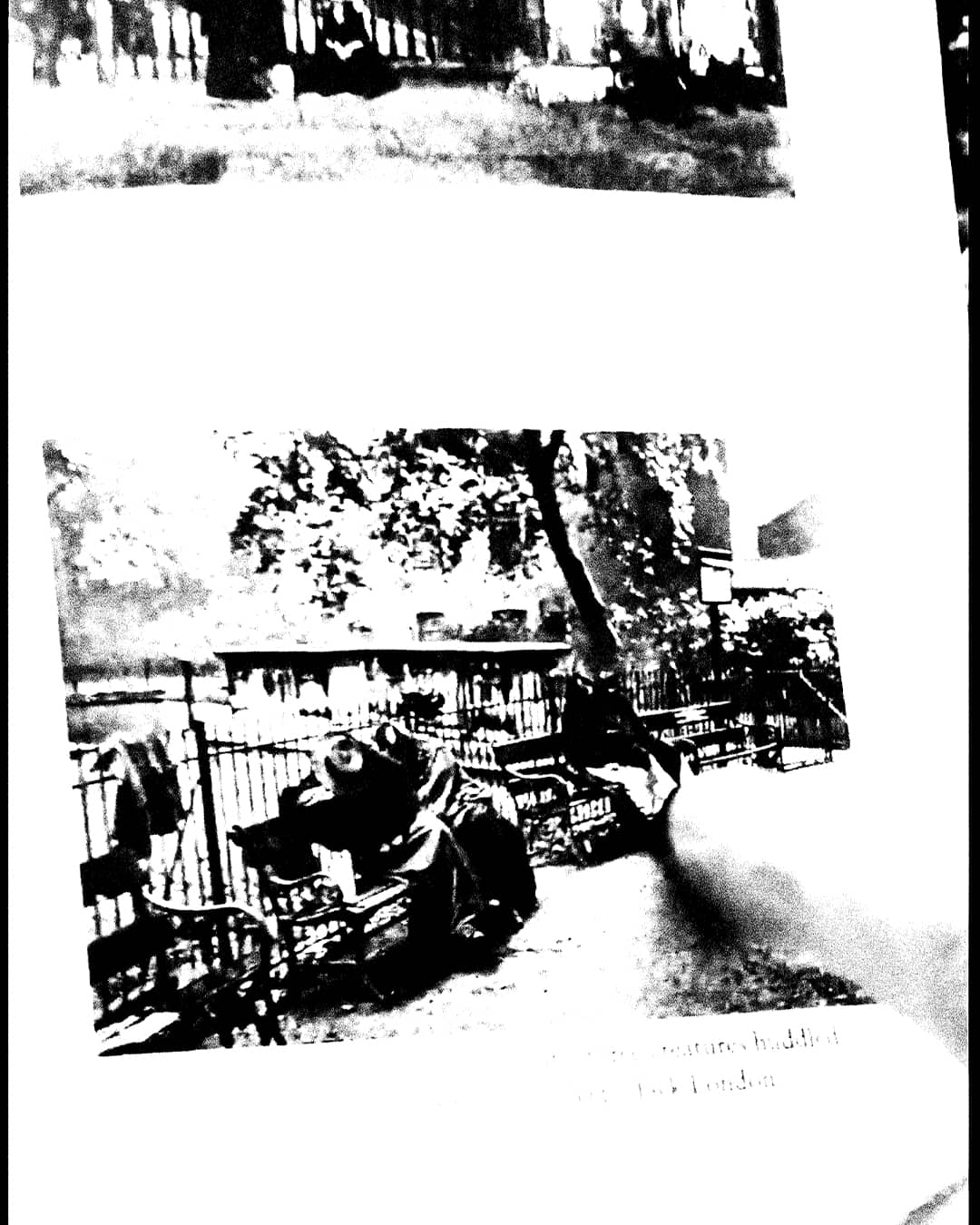
For the people who were living on Redchurch Street, suddenly this landscape – which is sort of bland – grew up all around them. Instead of being a place, it became an anywhere; a generic thing. Whereas in the past, when they did the Boundary development [the UK’s first council housing project, spanning Shoreditch and Bethnal Green], they were very careful. It was literally built on the rubble of the old Nichol estate, which was torn down because it was the worst rookery in London – really, it was the epicentre of crime and horror. When people like Henry Mayhew and Charles Booth surveyed it, they wrote about a place with no sewage, very little water, all of the rooms crammed with people who were working in the sweat shop industries down in Brick Lane – many, many to a room or working at home. So after the Jack the Ripper murders that happened in 1888, there was such outrage about the conditions that they started to redevelop here. In 1890, Boundary Estate was started: seven roads going off in every direction; shops, artisans, nice, well-run buildings that are still there. It’s really pertinent – the very name, Boundary Estate, is that you’re on the boundary of a magical world, which is Whitechapel Spitalfields, that’s gone through so many generations of different groups of immigrants who come and settle.
AARON: This is so interesting, it honestly makes the hair on my arms stand up. Just because so much of my thinking has been about that word ‘generic’ – part of the reason I wanted to be involved with AllSaints was that it’s a brand that’s been there for 30 years. The founder started the business essentially going to the French markets and buying a lot of vintage clothes, remaking them in really interesting fabric. There were these kind of drapey clothes, but it became this brand that was really synonymous with London style, especially in the ’00s – this Britpop, Kate Moss, Pete Doherty edginess. They were all around here partying, and it became really culturally relevant to British fashion, especially on the high street. What I care about is the sensibility and the care of those seven roads, and design that isn’t generic.
IAIN: It is like tailoring. You can wear a landscape.
AARON: Yes, exactly.
“The idea of belonging. That to me is what fashion is” – Aaron Esh
“The idea of belonging. That to me is what fashion is” – Aaron Esh
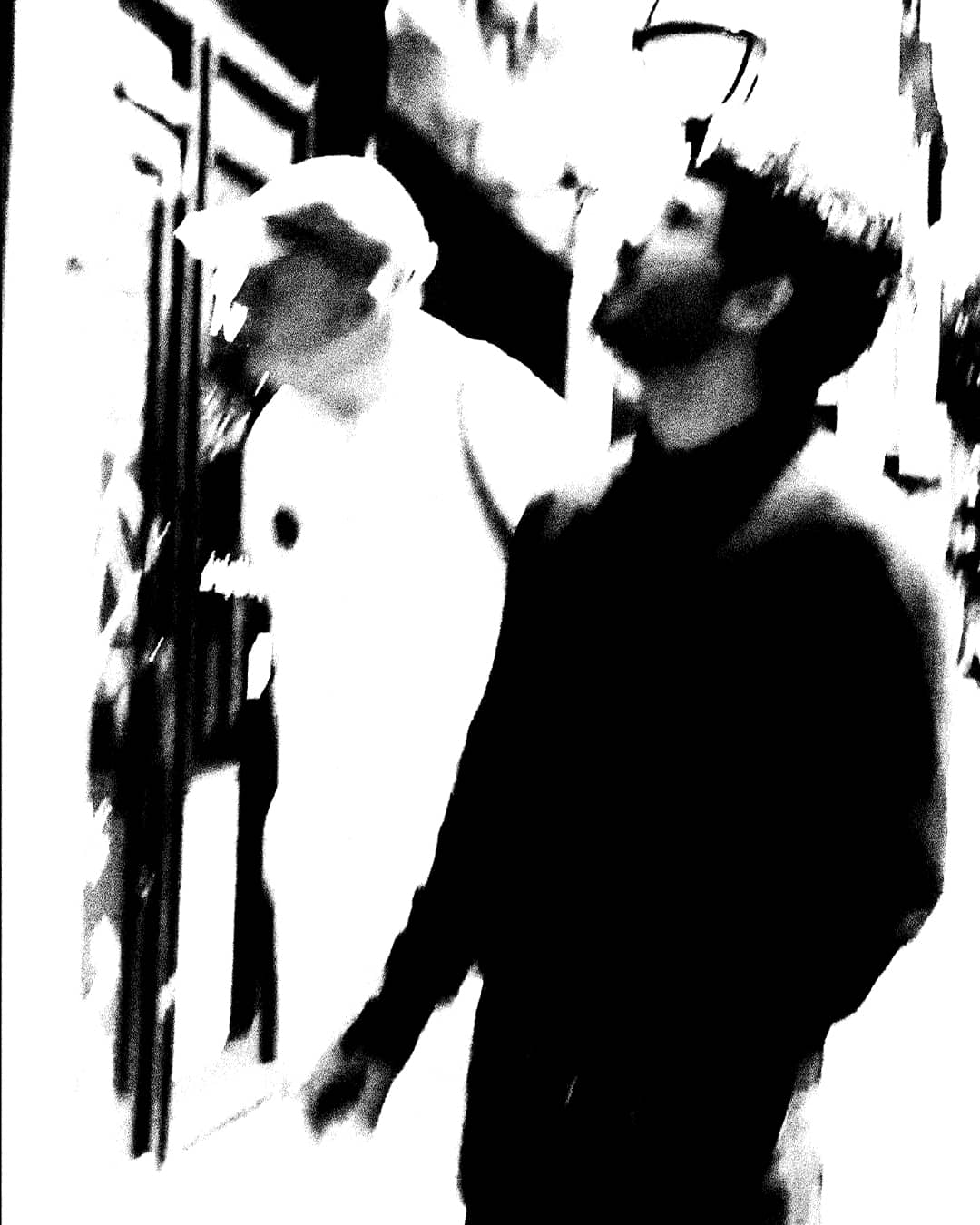
“To show the world, whether it’s a kid in Seoul or young girl in Seattle or New York, that part of the brand’s point of view is the idea of belonging” – Aaron Esh
“To show the world, whether it’s a kid in Seoul or young girl in Seattle or New York, that part of the brand’s point of view is the idea of belonging” – Aaron Esh
IAIN: How much does fashion grow from what people are wearing on the street?
AARON: There’s a Belgian designer called Raf Simons, one of my real inspirations and heroes. I remember being maybe 13 and seeing one of his fashion shows from Paris; these kids in ripped hoodies with graphics, among scaffolding, walking with their hands in their pockets and their hoods up. When I saw that show, I was like, ‘I know that kid.’ I was skateboarding in the park in Camden, so it was the idea that I could understand his reference and what he was making a commentary on, in terms of clothing and culture and subculture and identity – his reference of taking pictures of kids skateboarding in Paris. I think that kind of social commentary and culture is so interesting to me for my practice.
IAIN: How do you feel about the shops that are along Brick Lane? The bagel shop is the only survivor, very popular with taxi drivers – but then the clothes shops…
AARON: I mean, those all have all turned into vintage shops.
IAIN: In a weird way, what does that mean? I guess it’s like turning your clothes into some sort of antique collecting.
AARON: It is like that, yeah. And it really ranges from clothes that are throwaway to clothes that, like you said, are collector’s items and antiques. A lot of these shops here may be as much, if not more, curated than a brandstore. I find so much energy here in terms of inspiration for the type of clothes that people are looking for. Less so now, but when I was studying I would come to see what was going on.
IAIN: Well, we were in the same sort of business there. I was looking for books that told the stories of the place, and I would be able to persuade other people to read certain forgotten writers. It literally was branding – I made a brand of sort of London writing. And then people started collecting. I guess it’s the same with clothes.
AARON: It’s exactly the same, and also the same sensibility, and the same idea, because I was looking at and referencing clothes from London, on London kids, and now people buy the clothes because it makes them feel like they’re part of the sensibility of this city. It’s funny, I had this interesting conversation with someone a while ago, and they were talking about Britishness and Englishness. I remember saying to them, “Oh, I describe myself as a Londoner.”
IAIN: Oh, yeah. Which is to be everything.
AARON: How do you feel about that? Because, of all people…
IAIN: I think the thing about being a Londoner is having come from somewhere else. I grew up in Wales – I never felt myself a Londoner in that sense. I lived in South London, I lived in North London. It wasn’t until I got released to East London that I seemed to find what I was looking for. The difference between the sort of settled Hackney, and then the multiple possibilities of Whitechapel, which was so energetic – all these street markets could erupt – and then the river. The Thames was open to the world. All of our wealth, everything we’ve got, is from this dark history of colonialism and exploitation. But the Thames was also open to anybody from any culture – anyone could just come and join and work here. So London was a sort of open city for a long time.
AARON: And you still feel that now? Obviously it’s changed a lot.
IAIN: It is still, in a way. But at the top end you’ve got this phenomenal kind of inflow of dubious money, the oligarchs and all of that stuff, and the bottom is reaching levels of Victorian poverty. So I think the city’s out of balance. The thing is, obviously, at the end of the ’70s, the top end of Brick Lane was a political battle every weekend. Very racist – trying to oppose the Asian communities growing up. A tailor was killed, Altab Ali – the park just down there is named after this man, who was stabbed and killed in 1978 – and then the resistance of the local people and various others would meet at the top end of Brick Lane, where we crossed every Sunday.
AARON: My dad’s Turkish, right. British Turkish. But he went to Central Foundation Boys’ School. At the time, it was a grammar school, and he got into this school, and he said he was the first non-white person to go to that school. He said the way they treated him was as if... You know, my dad looks like me, he’s white. He said they would use every slur under the sun at a time, you know, we’re only talking 50 years ago. Do you think over time that people have embraced that kind of cultural diversity?
IAIN: I think they’ve been worn down into it, but it’s been a hard-won battle. I think it’s pretty open now, but it was really quite recent that things were severely racist. What a ridiculous aspect is that the people who were doing it were themselves immigrants in a previous generation.
AARON: I think there’s a broader point, which is that there is a melting pot here – of, like you said, food, culture, art, music, politics – that makes it quite unique. I guess the magazine is about this. It’s not about clothes. It’s about the community. I mean, my role here as the creative director – I’m new, right? But my perception of what makes a strong business in a fashion context is the idea of community. So the magazine is much more about these people who are part of my ecosystem. But also to show the world, whether it’s a kid in Seoul or a young girl in Seattle or New York, that part of the brand’s point of view is the idea of belonging. That, to me, is what fashion is.
IAIN: The whole background of what I did was community. When I started out, there was very much a community of writers who published their own stuff, exchanging it for free. It was a network that grew up between the mid-’60s and ’70s, and they were scattered about all over the country, and would do readings and things in pubs. So these were essentially artisan poets or novelists, but they had to be responsible for their own product. They were actually looking at the design of it, the edit, having to produce and sell it. You never got paid by the people who took the stuff, but nevertheless it was kind of business-establishing. I literally drove around the country in a van.
AARON: But that’s when you get the best work, when there’s no rules. You just do what you want.
IAIN: I think, there’s a sort of Xerox principle I’ve always thought of, that it starts with some strange, weird person in an attic room who’s got an amazing idea. He writes something that’s almost unintelligible, but then somebody else picks up a bit of energy from that and does a little more obvious version. Then eventually it becomes a best-selling novel, because it’s smoothed out and worked in a different way, and so in four jumps…
AARON: It becomes a Netflix show.
IAIN: Yes. And it all starts off with some complete lunatic person who’s doing the thing and working it. And then the smart people manage to sort of finesse that and take the original flame and build it up into a furnace. It’s astonishing. I’ve seen it.
AARON: I guess what I’m taking from this conversation is: how do you make something feel like it’s this crazy idea, but get it out into the world? Because it has to be in the middle somewhere for it to be, you know, ‘successful’, right? The age-old art and commerce.
IAIN: I mean, that’s the hardest thing in the world: how do you manage to turn these odd activities into something that actually supports you and a family and encourages someone else to do it?
AARON: Because you want it to travel. Like, niche is really important, and small is really important, but how do you let it get momentum to travel?
IAIN: Well, I was also aware that I was cannibalising this area. People have said to me, ‘How can you write about all these things in Whitechapel, you don’t live there,’ you know? ‘Your family has not been working in tailoring shops,’ whatever, whatever. I can’t defend that, but it’s true that you have to pay your dues.
AARON: Do you feel optimistic about London?
IAIN: Well, this is making me feel quite optimistic. While writing my book, The Last London, I wasn’t saying it was the last London – I was saying it was like my last London, in the sense that the things I’m interested in are not going to be around. One of the old guys who worked here in the offices had a big plate camera, and he had photographed all the sites of the Jack the Ripper murders and things. So in 1970 it still looked like 1870 – he was still living in that world. Tremendous stories, the wartime years, when they were fire-watching on the roof here, running about the roofs of Whitechapel. You could see Whitechapel was an island; it was a labyrinth. It was absolutely magic, and that magic has been somewhat dissipated by all the kind of comic-book versions and crappy Hollywood films that tried to tap into it. It seems to be regenerating to an extent now, with the kind of things that you’re doing.
AARON: I don’t know if patriotic is the right word – it’s not the word – but it’s a feeling of belonging. A feeling of belonging when you speak about it, or even knowing that you had your own personal experience on this exact street, on these exact cobbles.
IAIN: I can’t tell you how encouraging that is to me, because the sort of stuff I’ve been telling you – you feel these are stories people don’t really want to know about anymore. They’re into something else, and every time you come down, you think, ‘Oh God, this is such a foreign place to be.’
AARON: It’s important, those cobbles. The stories of those cobbles.
IAIN: And they’re still there. You feel the vibration.
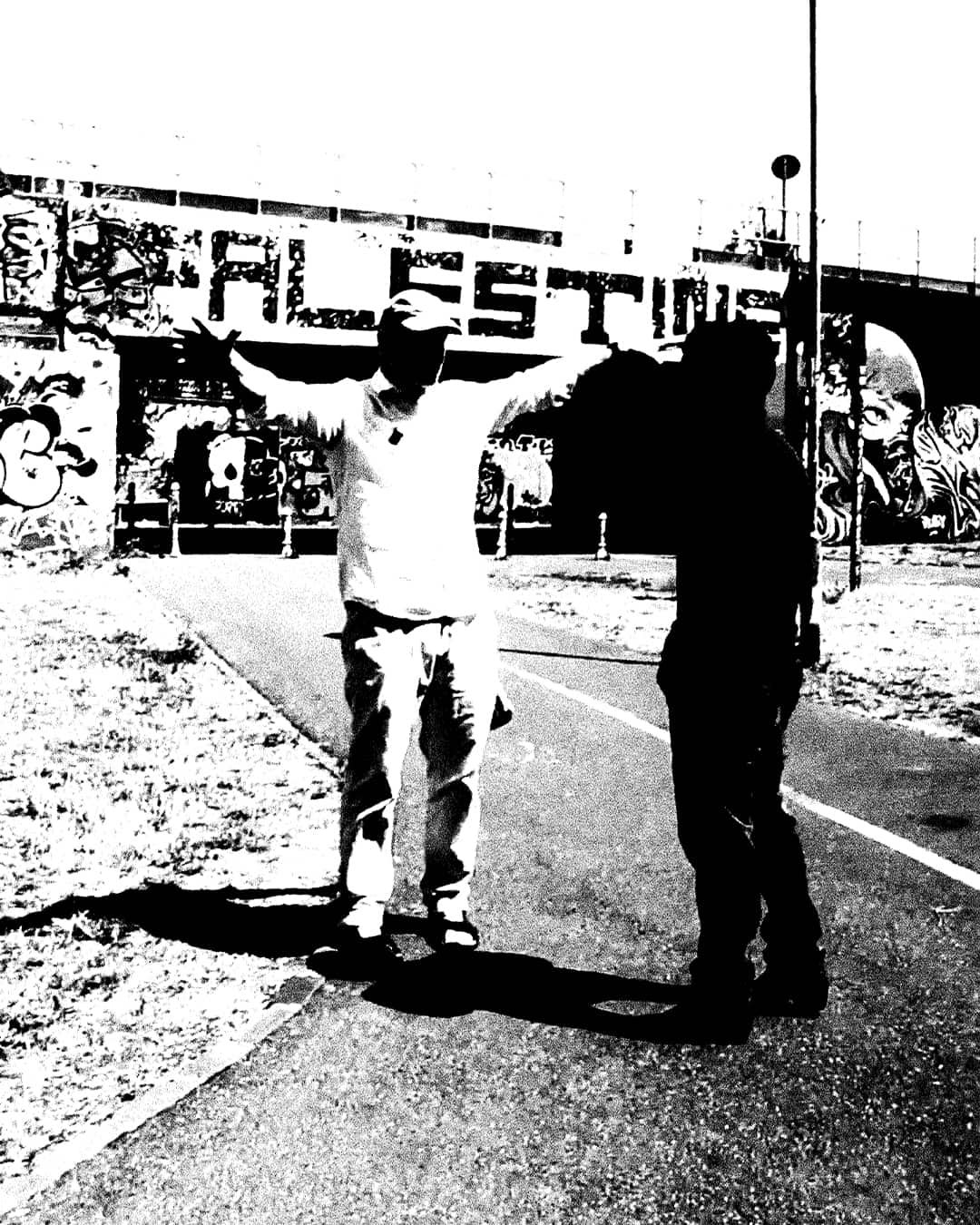
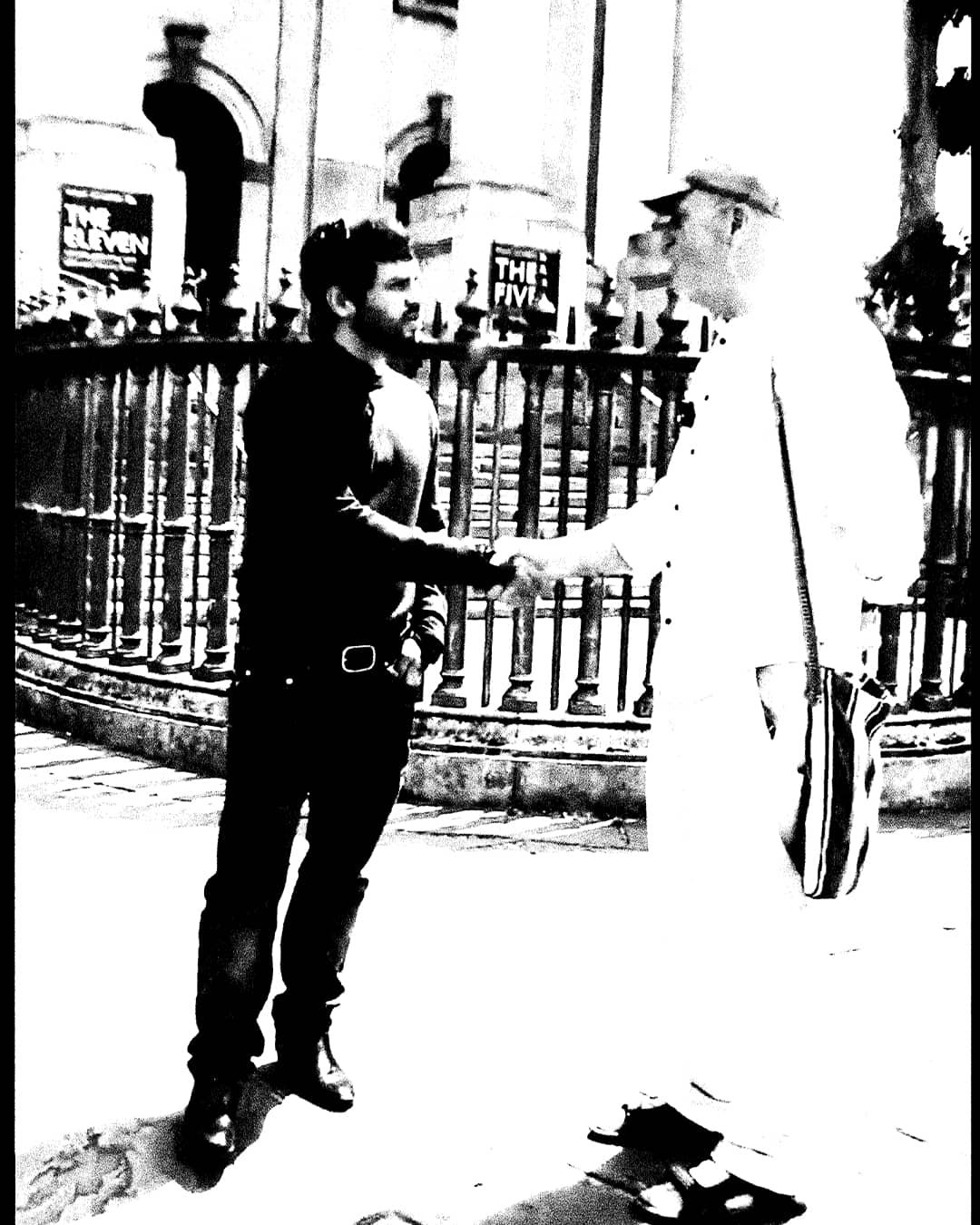
Introduction Jessica Heron-Langton
Video Stills Kai Gillespie
Introduction Jessica Heron-Langton
Video Stills Kai Gillespie